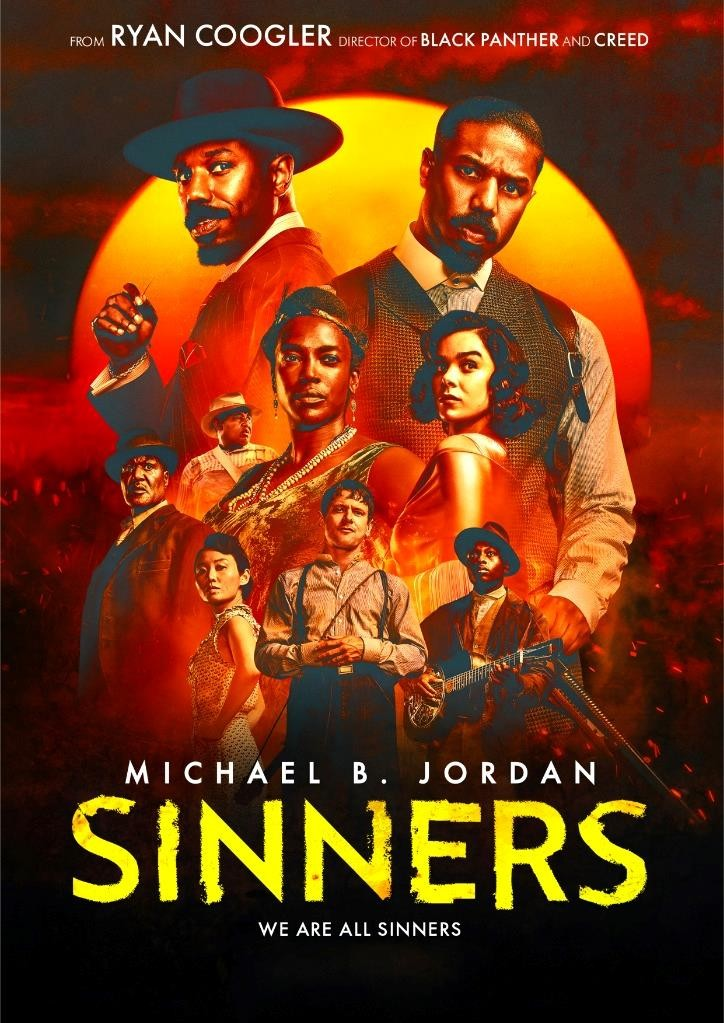
Vampires have always been used as symbolism in folklore and stories relating to fears and anxieties surrounding things like cultural norms, capitalism, sexuality, and more. In Vampires vs the Bronx, vampires represented gentrification and the damage it does to historically Black and Brown neighbourhoods and communities. And in Sinners, vampires are used to symbolise assimilation and an illusion of freedom it creates.
But what exactly is freedom?
The freedom offered by the Vampire reminded me of something Maya Angelou said with disdain about viewing America as a melting pot and the “goo” that it created. I felt that this was what the Vampire’s version of freedom felt and looked like—a disdainful "goo"; an existence birthed out of force, conformity, assimilation, and appropriation.
When the Vampire converts someone to vampirism, they automatically inherit the memories and abilities of their victim. The victim is no longer their own self, and instead becomes a copy of the Vampire—mimicking them and their mannerisms while also being capable of feeling any physical pain the Vampire experiences.
When the Vampire converted Grace's husband, Bo, he was then able to speak fluent Chinese to Grace as a way to intimidate and overpower her. And as the Vampire spoke to Samuel telling him that he wanted his stories and songs I had flashbacks to Jordan Peele’s Get Out.
Slim—the most wisened, harmonica, blues playing Unc if I've ever seen one—made a comment earlier in the film alluding to this notion by saying: “See, White folks they like the blues just fine, they just don’t like the people who make it.”
Throughout the film, Samuel—Smoke and Stack's younger cousin—was plagued by the choice of what kind of life he wanted to live and what freedom looked like to him. He could choose to play it safe and be "godly" by giving up his guitar—give up the blues—and follow in his preacher father’s footsteps. Or he could choose to be a "sinner" by stepping out into the Unknown like his older cousins and do what he truly wanted—play the blues.
Smoke tries convincing Samuel that he could still write and play church music instead of becoming a musician and living a life that may be full of trials, tribulations—and possibly failure—much like what he and Stack went through at his age. But simply playing music was not what lit the fire in Samuel’s soul, but rather it was the blues that set Samuel’s soul ablaze.
Slim illustrated the distinction between the two paths by sharing with Samuel how the blues wasn’t forced on them like the church and it's religion; instead, the blues was a part of their soul and their core essence brought with them from home—Africa, the Motherland. He stated that even though church music and the blues shared a common energy and source, the way it manifested and expressed itself via the church or the blues was very different.
Is "playing it safe" truly freedom?
Is giving up one's soul calling, desire, and way of being for something safer truly freedom?
Or is it a lie we tell—an illusion we create—to keep ourselves from experiencing discomfort, pain, or failure?
It is certainly the path of least resistance which was offered by the Vampire—and I would also argue offered by churches and religion as well.
But is it truly living?
Is it truly freedom?